

Overview
Filters help you narrow the visitor table. Save a reusable filter set as a segment, then reopen it from the Saved view selector or use it in automations such as webhooks and integrations.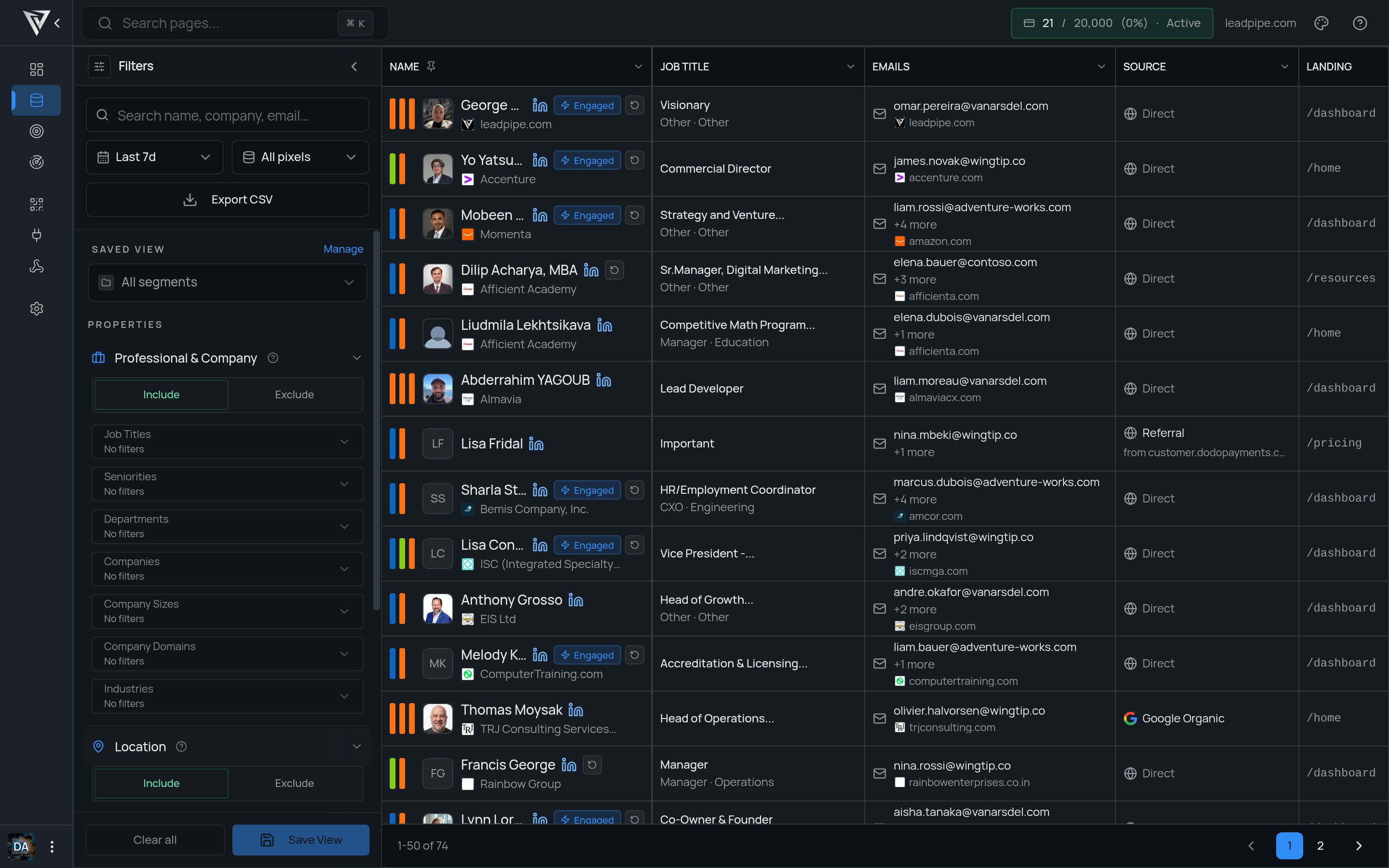
Common filter areas
Leadpipe groups filters around the decisions your team needs to make:Professional & CompanyLocationAcquisitionIntentEnrichmentContact & Recency
Include or Exclude matching traffic. That makes the panel useful both for finding good-fit visitors and removing noise.
Recommended workflow
1
Start with one question
Build the view around a concrete question, such as who viewed pricing recently or which visitors came from a specific channel.
2
Apply only the filters you need
Keep the first version narrow and understandable. It is easier to refine a focused view than untangle an overloaded one.
3
Save as a segment
Select Save View, name the segment, and add an optional description. You and your team can then return to the same working set without rebuilding its filters.
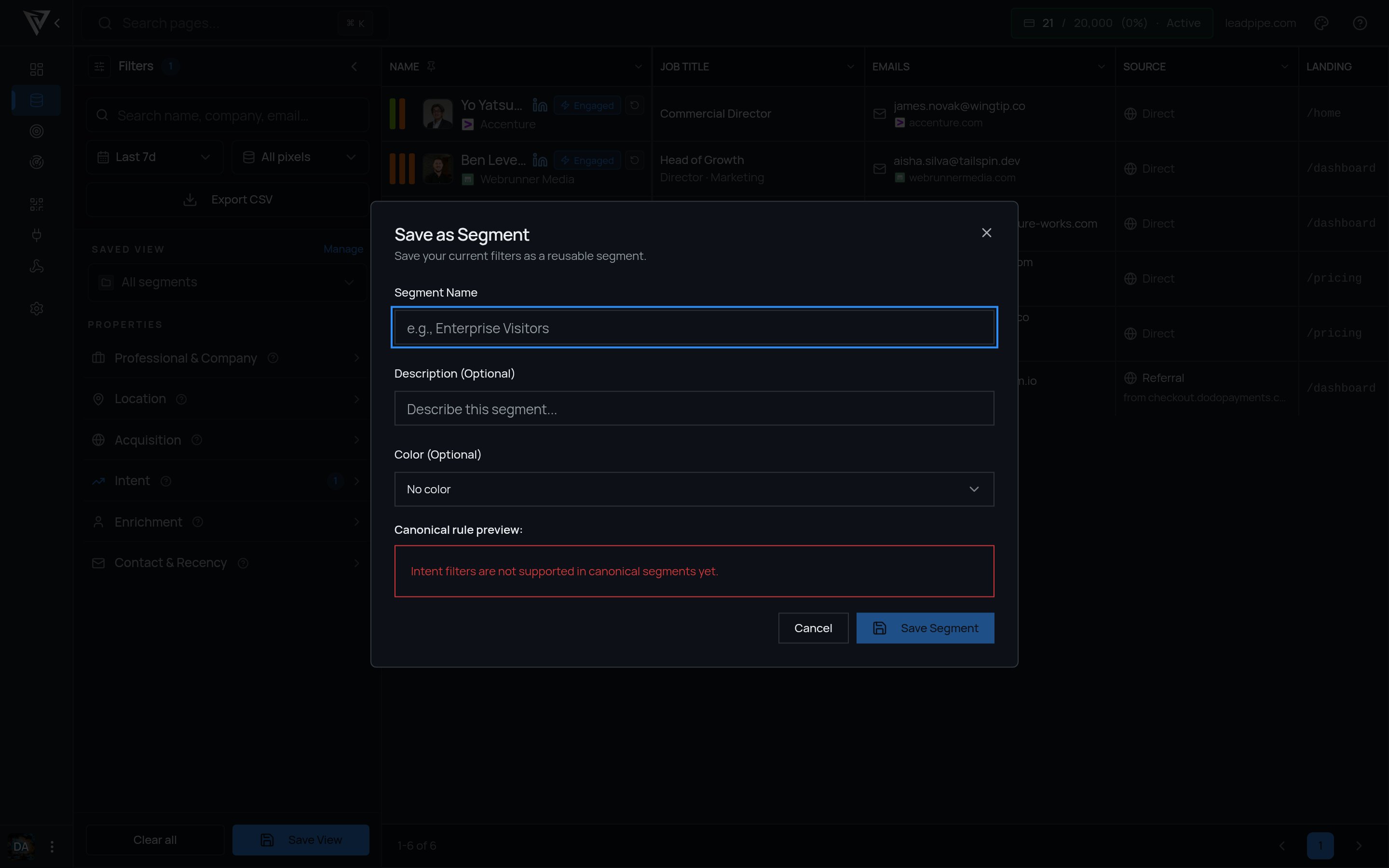
The dialog reports when a selected filter cannot yet be saved in a canonical segment. Remove the unsupported filter or keep working with the unsaved result set.
Working with saved views and segments
Once you save a segment, select it from the Saved view area without rebuilding the logic each time.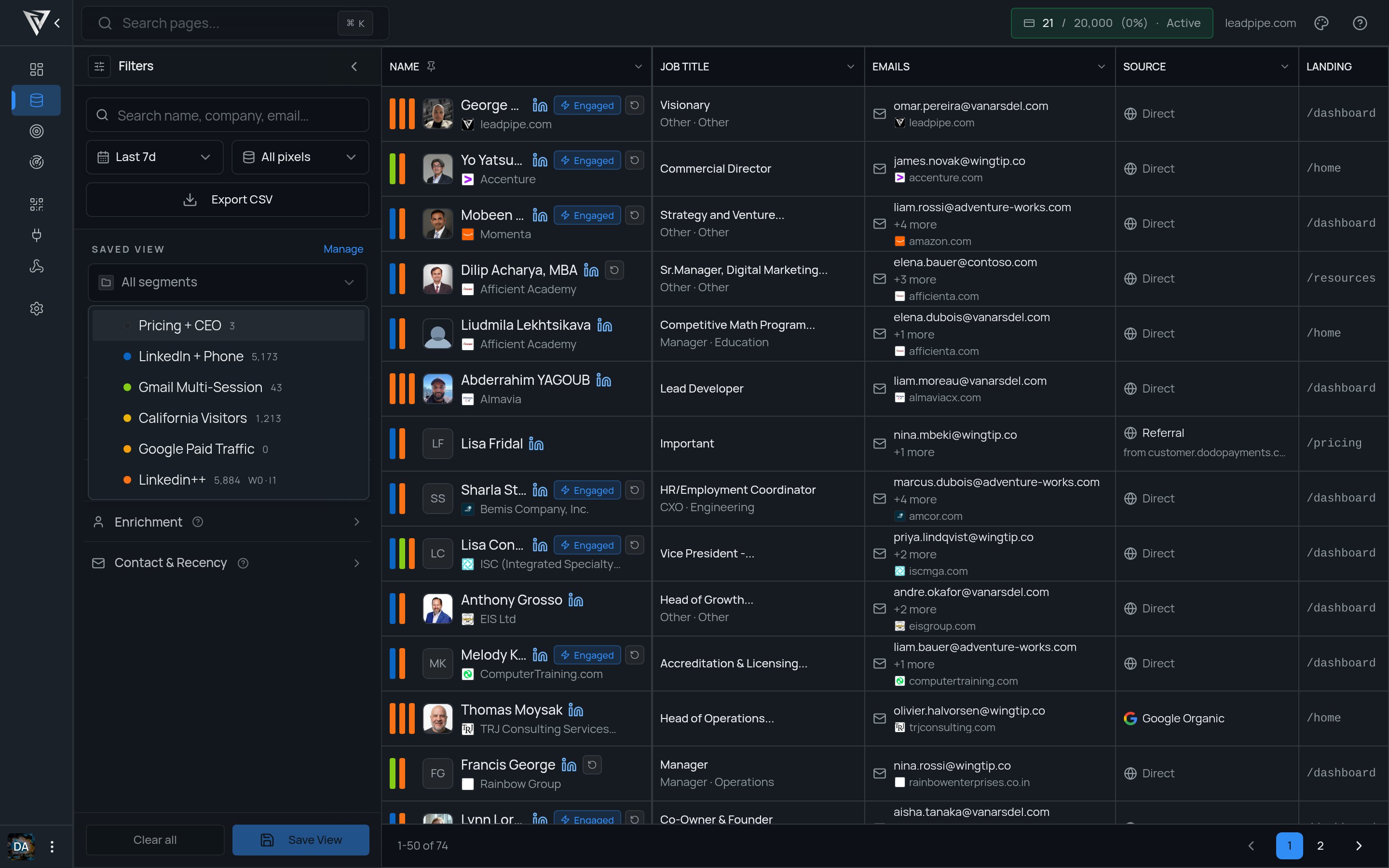
- review the same audience every day
- compare different audience slices quickly
- reuse one saved segment across webhooks or integrations
Good first segments
- Recent pricing page visitors
- High-intent visitors from paid or social sources
- Visitors from target industries or company sizes
- Visitors from one specific pixel or domain